TRANSMISSION 05 / ALPHA DEVELOPMENT JOURNAL / 18 OCTOBER 2026
Living Worlds — From Cetonis Orbit to Dagon Prime Jungle
A planet on the horizon. A rustle beneath the canopy.
From orbit, a world begins as a silhouette. Near the ground, it becomes a collection of sounds, shadows and things moving beyond your sight. This entry looks at two different destinations in the Gornverse alpha: Cetonis, seen across its desert globe, and Gornax, a jungle region on Dagon Prime. They ask for different kinds of attention.
Cetonis: a world before landfall
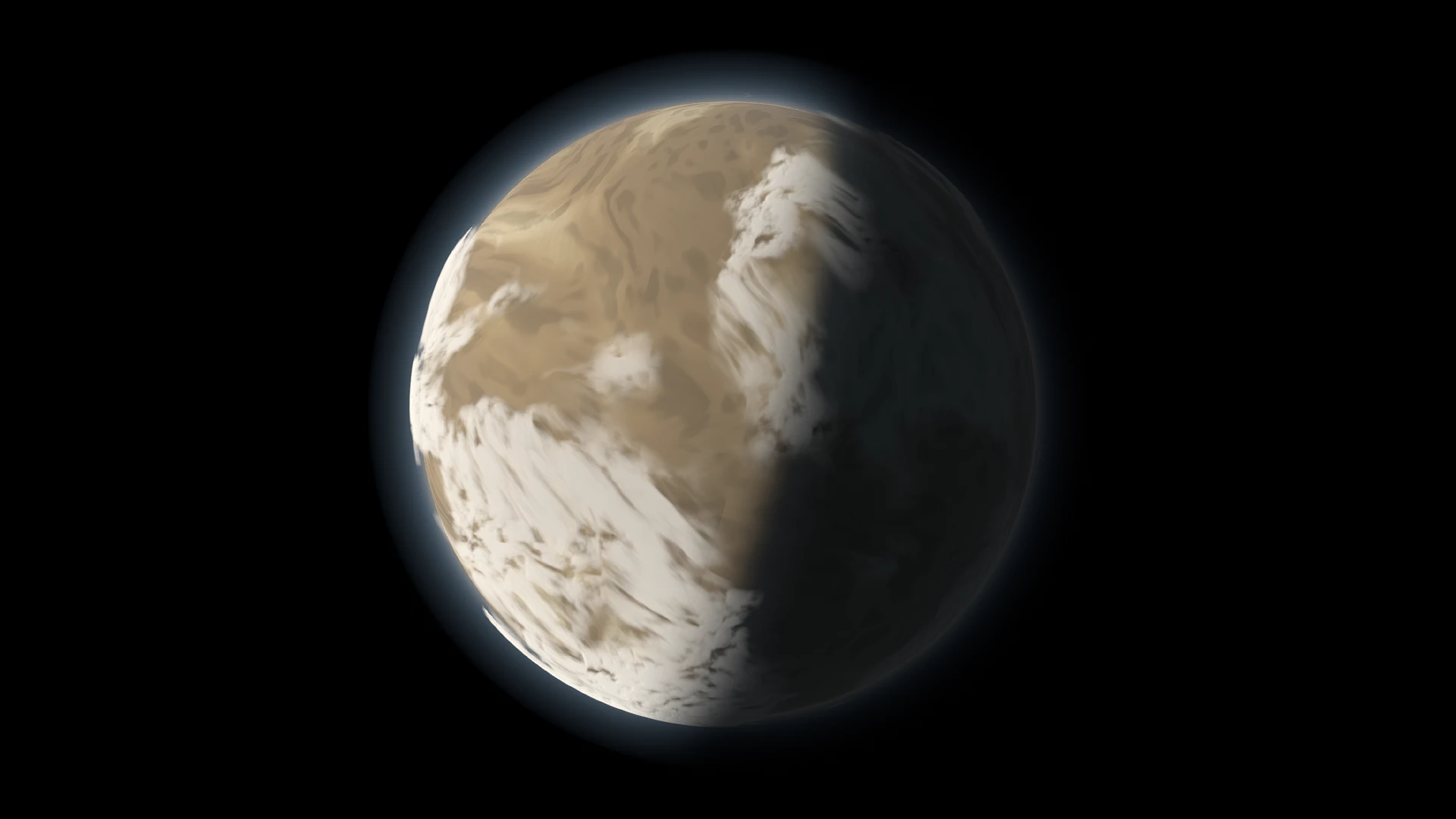
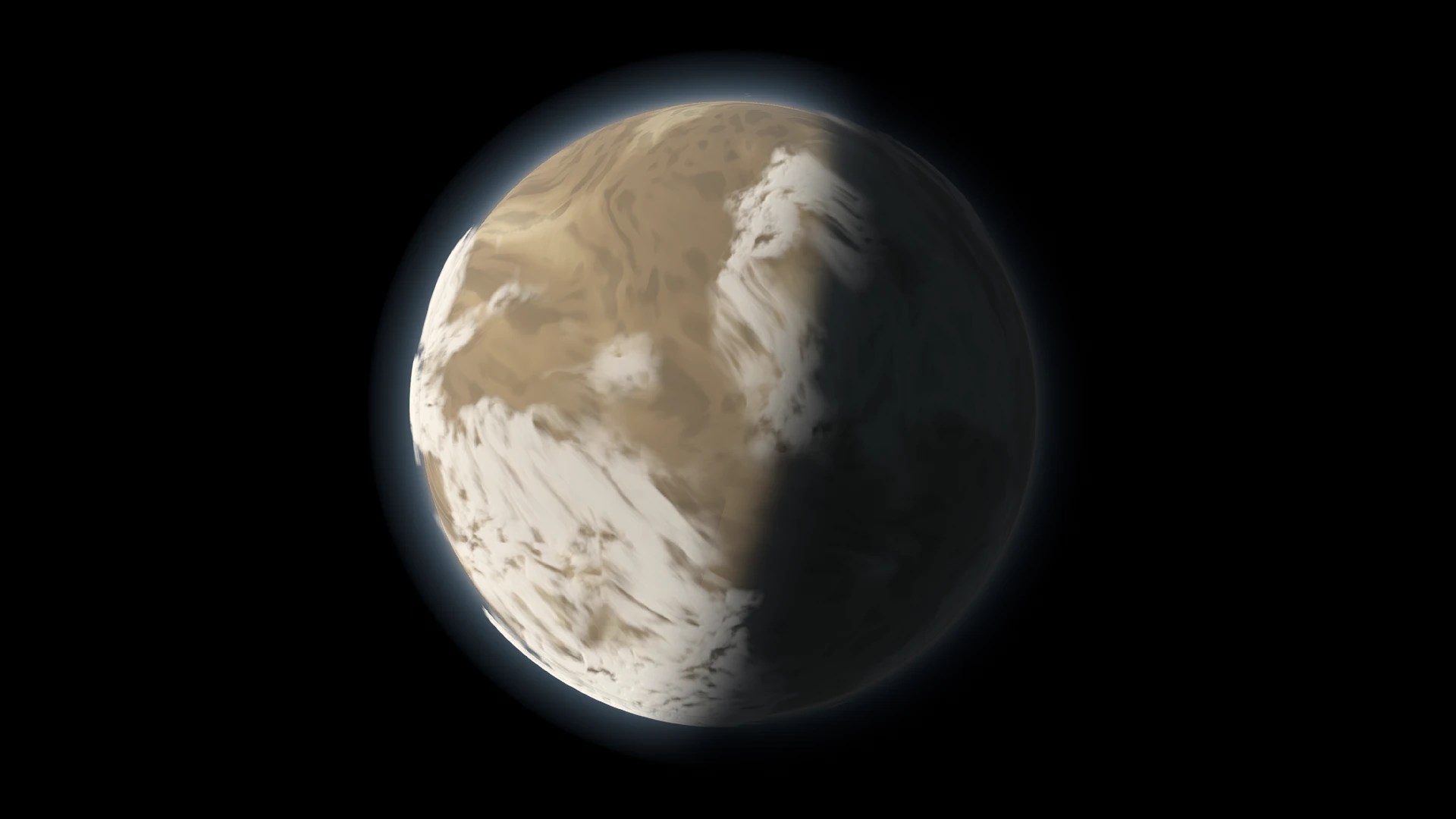
Cetonis should be recognisable before you reach the surface. Its orbital presentation combines tan desert geology with layered volumetric clouds, cloud shadows and a thin atmospheric rim. The boundary between day and night gives the globe a changing silhouette, rather than lighting it evenly from every direction.
The clouds move across that surface. Light and shadow make their relationship with the desert easier to read: pale bands above, darker shapes below, then the subdued night hemisphere. It is an environmental identity built from a few connected elements.
Our current work also keeps that identity consistent as the viewing distance changes. The close planetary view and the distant representation share their weather. The original ground dunes and city remain part of Cetonis. The aim is for a destination to feel like the same world as you approach, while its detail changes with distance.
Dagon Prime: life beneath the canopy
Dagon Prime belongs to the darker side of our setting: a ruined world in Gornverse’s fictional Fomalhaut A, orbiting a black hole. Gornax is one of its jungle regions. Here, the visual language becomes close and layered—tree trunks, understory, grass and mist instead of an entire globe suspended against space.
The latest in-engine cinematic follows a continuous, low-altitude camera path through that environment. Warm accretion light catches the foliage while darker trees break up the distance. Ground mist leaves some shapes half revealed. The result should invite a closer look: a clearing, a silhouette, then movement.
▶ PLAY LOOP■ STOP LOOP · 4 SECONDS


The full twenty-second take includes raptors, triceratops and an ankylosaurus. These are the game’s native creature assets within the Gornax environment. Their positions and performances are directed for the cinematic, giving us a clear way to show their silhouettes and scale among the trees.
The directed take gives us a way to study those creatures within the landscape: how a silhouette reads through the foliage, how a pair occupies a clearing and how movement draws your eye. The environment has to give that moment room to breathe.
Making distance feel believable
A desert world seen from space and a misted jungle seen close up have different demands. Cetonis needs a coherent outline, geology and atmosphere at large scale. Gornax needs depth between nearby objects: foliage that overlaps, lighting that separates forms and creatures with readable silhouettes.
The shared design goal is a place you can recognise and remember. We want you to recall a destination through its character—the pale clouds of Cetonis or the amber canopy of Gornax—as well as its name on a map.
These two locations show different sides of the frontier. Environment art, visibility and encounter presentation continue to develop, and future journals will show more of those places through play.
Where would you look first?
Would you linger over Cetonis’s cloud-wrapped horizon or follow the movement beneath Gornax’s canopy? Tell us which destination—and which view of it—you want to see next.
KEEP THE FRONTIER ON YOUR RADAR
Wishlist Gornverse: The Dark Frontier on Steam and follow the development journal.
WISHLIST ON STEAM ↗GORNVERSE: THE DARK FRONTIER / © 2026 GornHegemony Management FZCO
Leave a Reply